

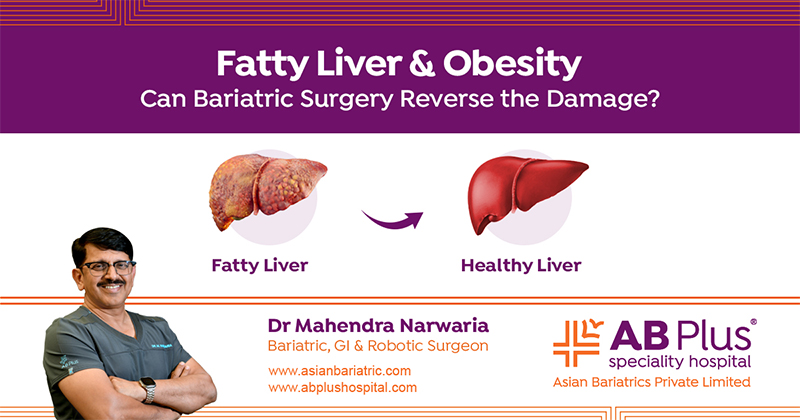
Fatigue after meals, a dull ache on the right side of your abdomen, or a routine ultrasound that flags an "enlarged liver", these are signs that many Indians dismiss or overlook. Yet they could point to a condition silently affecting millions: fatty liver disease. What most people don't realise is that excess weight is one of its biggest drivers, and that addressing obesity can be one of the most powerful ways to heal it.
What Is Fatty Liver Disease?
Fatty liver, medically known as Non-Alcoholic Fatty Liver Disease (NAFLD), occurs when excess fat accumulates in the liver cells in people who drink little or no alcohol. It is now one of the most common liver conditions in India, closely tied to rising rates of obesity, diabetes, and metabolic syndrome.
NAFLD exists on a spectrum:
- Simple fatty liver (Steatosis): Fat accumulation with little inflammation; often reversible
- Non-Alcoholic Steatohepatitis (NASH): Fat plus active inflammation and cell damage
- Fibrosis and Cirrhosis: Scarring of liver tissue; advanced and potentially irreversible
- Liver failure: The most severe end stage
Catching and addressing fatty liver early is critical. The good news? In its earlier stages, the damage can often be reversed.
The Strong Link Between Obesity and Fatty Liver
Obesity and fatty liver are deeply connected. When excess fat, particularly visceral fat stored around the abdomen, builds up in the body, the liver is one of the first organs to bear the burden.
Here's what happens biologically:
- Excess fat triggers insulin resistance, forcing the liver to process higher levels of fatty acids
- The liver begins storing fat it cannot efficiently metabolise
- Over time, this leads to chronic inflammation and progressive liver damage
- Conditions like Type 2 diabetes and high triglycerides, common in obese individuals, further accelerate the process
This is why NAFLD and obesity almost always go hand in hand. Treating one without addressing the other rarely delivers lasting results.
Signs You May Have Fatty Liver
Fatty liver disease is often called a "silent" condition because many people have no symptoms in the early stages. When symptoms do appear, they may include:
- Persistent fatigue or low energy
- Discomfort or heaviness in the upper right abdomen
- Unexplained weight gain despite normal eating
- Elevated liver enzymes on a routine blood test
- An enlarged liver detected on ultrasound
If you are living with obesity and recognise any of these signs, a liver evaluation is strongly recommended.
Can Weight Loss Reverse Fatty Liver Damage?
The answer is a clear YES, especially in the earlier stages. The liver is a remarkably resilient organ. Studies consistently show that meaningful weight loss can:
- Reduce fat content in liver cells
- Lower liver inflammation
- Improve or even normalise elevated liver enzymes
- Slow or halt the progression toward fibrosis and cirrhosis
Even a weight loss of 10% of body weight has been shown to produce significant improvements in liver health. The greater and more sustained the weight loss, the more pronounced the benefit.
When Diet and Exercise Are Not Enough
For individuals with mild obesity, dietary changes and physical activity can be effective. However, for those with significant excess weight, particularly when fatty liver has already progressed to NASH or early fibrosis, lifestyle changes alone often fall short. Sustained, meaningful weight loss becomes extremely difficult without additional intervention.
This is where bariatric surgery offers a clinically proven and powerful solution.
How Bariatric Surgery Helps Reverse Fatty Liver
Bariatric procedures such as Sleeve Gastrectomy and Gastric Bypass do far more than reduce the number on the scale. They work at a metabolic level, producing changes in hormones, insulin sensitivity, and fat metabolism that directly benefit the liver.
Key benefits for liver health include:
- Significant fat reduction in the liver
- Improved insulin sensitivity
- Reduced liver inflammation
- Lower risk of fibrosis progression
- Normalisation of liver enzymes
Many patients see meaningful improvement in their liver health within 6 to 12 months after surgery, alongside the broader benefits of sustained weight loss.
Frequently Asked Questions (FAQs)
- Can fatty liver go away completely?
In its early stages (steatosis), yes. Fatty liver can fully reverse with sustained weight loss. More advanced stages like NASH may partially improve, while cirrhosis involves permanent scarring that cannot be undone. - Is fatty liver dangerous if left untreated?
Yes. Without intervention, NAFLD can progress to NASH, fibrosis, cirrhosis, and in some cases liver failure or liver cancer. Early treatment is essential. - Does bariatric surgery directly treat fatty liver?
While bariatric surgery is not performed specifically for fatty liver, the metabolic changes and sustained weight loss it produces have been shown to significantly improve, and in many cases reverse fatty liver disease. - Who is a good candidate for bariatric surgery?
Generally, individuals with a BMI over 35, or over 30 with obesity-related conditions such as fatty liver, diabetes, or hypertension, may be suitable candidates. A thorough specialist evaluation is necessary. - How soon will my liver improve after surgery?
Many patients show measurable improvements in liver fat and enzyme levels within 6 to 12 months post-surgery. The timeline varies depending on the severity of the condition and individual health factors. - Is it safe to have bariatric surgery if I already have fatty liver?
In most cases, yes. Your surgical team will assess your liver health prior to the procedure. Mild to moderate fatty liver is common in bariatric surgery candidates and is carefully managed by experienced surgeons.
Take the First Step Toward a Healthier Liver
Fatty liver disease and obesity are two sides of the same coin. Tackling both together is the most effective path to recovery. If you have been told your liver is affected, or if you are living with obesity and concerned about your long-term health, expert help is available.
Dr. Mahendra Narwaria at Asian Bariatrics Private Limited has helped thousands of patients not only lose weight but reverse the metabolic damage that comes with it, including fatty liver disease. With over 25 years of expertise and 10,000+ successful procedures, you are in highly experienced hands.
Don't wait for the condition to progress. Schedule a consultation today and take control of your liver health, your weight, and your future.
Dr. Mahendra Narwaria is a renowned pioneer in laparoscopic bariatric surgery in India, bringing over 25 years of surgical expertise and a record of 10,000+ successful procedures. As the founder of Asian Bariatrics Private Limited in Ahmedabad, he leads a world-class Centre of Excellence recognized for its advanced robotic and metabolic interventions. A distinguished academic and mentor, Dr. Narwaria holds a Limca Book of Records entry for his surgical volume and is an International Excellence Federation (IEF) recognized trainer. His commitment to precision and long-term patient care ensures that every individual receives gold-standard treatment in their journey toward health and vitality.
Disclaimer: This blog is for informational purposes only and should not be treated as medical advice. Every patient’s condition is different. Please consult a qualified doctor before making any decisions about your health.